Can Cats Eat Jelly Jam

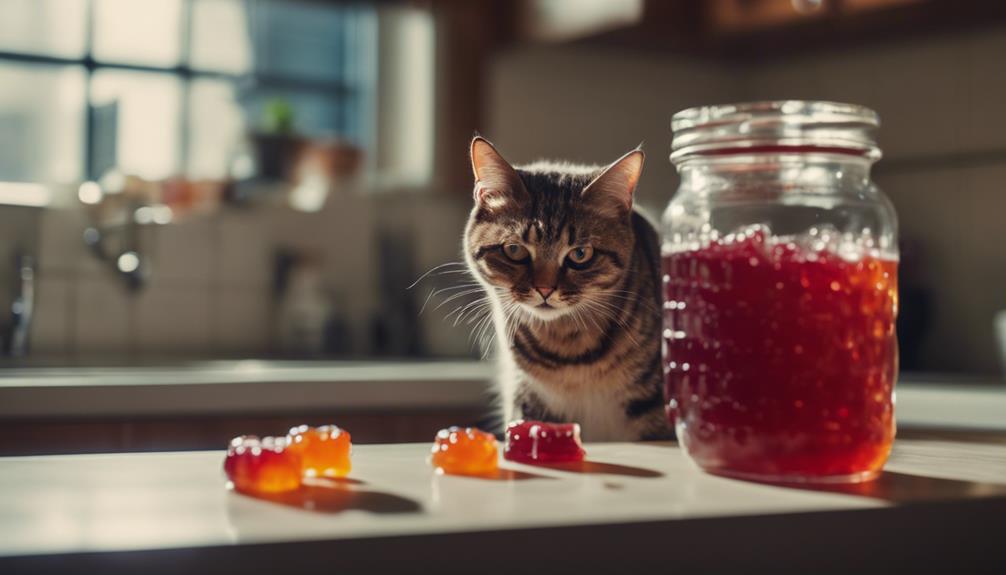
Cats should not eat jelly jam as it lacks essential nutrients, contains high sugar levels, and poses health risks. Regular consumption can lead to digestive issues, obesity, and nutrient deficiencies in cats. Jelly jam is not a suitable treat option for felines. It's important to prioritize a balanced diet tailored to a cat's nutritional needs. Consider exploring safer treat options and consulting a vet for guidance on feline nutrition. The impact of jelly jam on cats' health can be significant.
Jelly Jam: Cats' Safe Treat?

Jelly jam is not a safe treat for cats due to its lack of essential nutrients and high sugar content, which can lead to various health issues.
While cats may be attracted to the taste and texture of jelly jam, it is important to understand that this food item is not suitable for their consumption. Jelly jam contains high amounts of sugar, which can lead to obesity and dental issues in cats. Additionally, some types of jelly jam may contain artificial sweeteners, such as xylitol, which can be toxic to cats. Therefore, it is best to avoid feeding jelly jam to your feline friend.
Can cats consume honey? It is generally safe for cats to consume small amounts of honey as an occasional treat, but it should not be a regular part of their diet. Honey should also be free of any added sugars or artificial sweeteners. As always, it is best to consult with a veterinarian before introducing new foods to your cat’s diet.
High sugar content in jelly jam can result in health problems like obesity and diabetes in cats. Additionally, offering jelly jam to cats can cause digestive upset such as diarrhea and vomiting.
To safeguard the well-being of your feline companion, it is advisable to avoid giving them jelly jam and instead opt for healthier treat options like small amounts of cat-safe fruits to provide necessary nutrients without compromising their health.
Jelly Jam Nutrition for Cats
Nutritionally speaking, jelly jam falls short of meeting the dietary requirements of cats due to its lack of essential nutrients such as proteins and fats. While cats may enjoy the sweet taste of jelly jam, it is important to recognize that this food is high in sugar and contains very small amounts of the nutrients cats need to thrive.
Regular consumption of jelly jam can lead to health issues in cats, including digestive upset such as diarrhea and vomiting. Due to its minimal nutritional value and potential to cause problems, cats should only have jelly jam as an occasional treat.
To make sure that cats meet their nutritional requirements and avoid feeding them something high in sugar like jelly jam, it is best to opt for cat food specifically formulated to meet their dietary needs.
Grape Jelly and Cats: Compatibility

Grape jelly can be harmful to cats due to the potential toxicity of grapes, which can lead to kidney issues. While cats may be more resistant to grape toxicity than dogs, it's still recommended to avoid feeding them grape jelly.
The heating and canning processes used in making grape jelly may help reduce the toxic components of grapes, but caution is advised when considering cats' jelly consumption.
Grape Jelly Safety
During the canning process of grape jelly, precautions must be taken to guarantee the safety of cats due to the potential toxicity associated with grapes. Grape jelly can be harmful to cats as grapes contain substances that can lead to kidney failure in felines. While cats are generally more resistant to grape toxicity than dogs, it is still important to avoid feeding them grape jelly.
The heating and canning processes involved in making grape jelly may reduce the toxic components present in grapes, but the risk remains. If a cat ingests grape jelly, symptoms such as vomiting, upset stomach, increased water intake, lethargy, and loss of appetite may occur. In such cases, it is essential to seek immediate guidance from a veterinarian for potential treatment.
Cats' Jelly Consumption
It is essential for cat owners to be vigilant about the potential risks associated with grape jelly consumption by felines to safeguard their health and well-being. Even if a cat ate a little bit of grape jelly, it can lead to severe consequences due to its toxicity to cats. Signs of digestive upset, kidney failure, and the high sugar content in grape jelly necessitate immediate veterinary attention.
Preventing accidental consumption of grape jelly is vital, as it is considered one of the toxic foods for cats. Consulting a veterinarian and educating oneself on harmful food items for cats can help in ensuring the safety of feline companions around grape products.
Orange Jelly and Feline Consumption
The ingestion of orange jelly by felines can pose health risks due to the presence of citrus essential oils that are toxic to cats. Cats may experience digestive issues like vomiting and diarrhea after consuming orange jelly. The orange peels in the jelly can further exacerbate these problems.
Additionally, cats are likely to dislike the smell of citrus in orange jelly, which could lead to refusal to eat the jelly. Hence, it is important to avoid feeding cats orange jelly or marmalade to prevent any potential harm to their health.
It is vital to be cautious about the ingredients in foods given to cats, ensuring their well-being and avoiding any adverse reactions.
Safe Jelly Flavors for Cats

Safe jelly flavors for cats encompass strawberries, raspberries, and blueberries, providing feline-friendly options for occasional indulgence. When offering jelly to cats, it's important to take into account the sugar content and serve it sparingly. Apricot jelly can be safe for cats if the pit is removed before consumption. While cats cannot taste sweetness, they may still enjoy the texture and flavor of these fruity jellies. Below is a table summarizing the safe jelly flavors for cats:
| Jelly Flavor | Safety for Cats | Notes |
|---|---|---|
| Strawberries | Safe | Watch sugar content |
| Raspberries | Safe | Rich in antioxidants |
| Blueberries | Safe | High in vitamin C |
Sugar-Free Jelly: Cat-Friendly?
Sugar-free jelly presents potential risks for cats due to the inclusion of sugar alternatives like xylitol, which can be harmful to their health. When considering whether sugar-free jelly is cat-friendly, it's essential to weigh the following factors:
- Commercial sugar-free jelly may contain harmful sugar alternatives like xylitol.
- Xylitol in sugar-free jelly can cause liver failure in dogs, but the risks for cats are uncertain.
- Homemade sugar-free jelly is a safer option for cats than store-bought varieties.
- It is best to avoid giving any jelly, including sugar-free, to cats unless made from fresh fruit**.
Given the potential risks associated with sugar alternatives in sugar-free jelly, caution is advised when considering offering it to your feline companions.
Feline Preference: Do Cats Like Jelly?

Cats typically exhibit a natural inclination towards meat-based foods, leading to a general disinterest in jelly. While some cats may try jelly out of curiosity, their preferences usually lean towards meat due to their carnivorous nature.
It is not common for cats to enjoy jelly as a regular part of their diet. If a cat does show interest in jelly, it's important to monitor their consumption as excessive intake can lead to health issues.
To guarantee a cat's well-being, it is advisable to offer a balanced diet that aligns with their carnivorous instincts rather than incorporating jelly as a primary food source. Consulting a vet for guidance on feline nutrition can help maintain a cat's health and happiness.
Strawberry Jam: Cat Safety Concerns
Strawberry jam poses potential risks to feline health due to its high sugar content and the possibility of allergic reactions in cats. When considering the safety concerns related to cats consuming this sweet spread, it is essential to keep the following points in mind:
- High Sugar Content: Strawberry jam contains high levels of sugar, which can lead to obesity and dental issues in cats.
- Allergies: Cats may have allergies to fruits like strawberries, making them susceptible to adverse reactions if they consume strawberry jam.
- Harmful Additives: Store-bought jams often contain additives that are harmful to cats and can cause digestive problems.
- Monitoring and Vet Consultation: If a cat accidentally consumes strawberry jam, it is important to monitor them for symptoms and contact a vet if any concerning signs appear.
Overindulgence: Jelly and Cat Health

Indulging cats excessively in jelly can lead to digestive issues and potential nutrient deficiencies, impacting their overall health and well-being. Cats may experience problems such as gas, diarrhea, and vomiting due to overconsumption of jelly, while the high sugar content in jelly can contribute to obesity in felines. Additionally, if jelly becomes a significant part of a cat's diet, it can lead to an unbalanced diet and subsequent nutrient deficiencies. Monitoring the amount of jelly your cat consumes is essential, ensuring it doesn't overshadow their complete diet. Balancing treats with a nutritionally complete cat diet is crucial for maintaining optimal cat health.
| Concerns | Effects |
|---|---|
| Digestive issues | Gas, diarrhea, vomiting |
| Obesity | Weight gain |
| Nutrient deficiencies | Lack of essential nutrients |