Can I Get Rabies From A Cat Scratch


Rabies transmission from a cat scratch is possible but rare. Bites are the primary way the virus spreads, not scratches. However, aggressive scratching can lead to aerosolized transmission. Immediate medical attention is critical if exposed to potential rabies. Though contracting rabies from a scratch is uncommon, it's important to seek help promptly. Understanding the risks and symptoms associated with rabies can aid in taking necessary precautions. If concerned about rabies transmission from a cat scratch, it's advisable to consult a healthcare professional for further guidance on preventive measures.
Understanding Rabies and Cat Scratches

Understanding the potential link between rabies and cat scratches is essential for recognizing and managing the risks associated with these interactions. While rabies transmission through cat scratches is low, primarily occurring through saliva, there is a possibility of aerosolized transmission during aggressive scratching behavior.
Although rare, contracting rabies from a scratch can happen, particularly in aggressive encounters. It is important to note that the primary mode of rabies transmission is through bites rather than scratches. Immediate medical attention is vital if exposed to potential rabies, even through scratches, to assess the risk and initiate any necessary preventive measures.
Transmission of Rabies Through Cat Scratches
Rabies transmission through cat scratches is relatively low, with saliva being the primary mode of spread. However, in cases of intense scratching leading to aerosolized transmission, the risk increases.
While rare, it is possible to contract rabies through scratches during aggressive encounters, emphasizing the importance of seeking immediate medical attention in any potential exposure scenario.
Cat Scratch Risk
While rabies transmission through cat scratches is generally low, it is important to be aware of the potential risks associated with aggressive behaviors that may lead to aerosolized spread of the virus. Contracting rabies from a scratch is rare, as the virus is primarily spread through saliva, with bites being the main mode of transmission. Immediate medical attention is vital if exposed to potential rabies through a cat scratch. The likelihood of contracting rabies from a scratch alone is low, but it is important to take precautions. Below is a table highlighting key points related to cat scratch risk:
| Category | Risk Level |
|---|---|
| Rabies Transmission | Low |
| Aerosolized Spread | Possible |
| Importance of Medical Attention | High |
Rabies Prevention
Preventing rabies transmission through cat scratches involves recognizing the potential risks associated with aggressive behaviors that could lead to aerosolized spread of the virus. While contracting rabies from a scratch is rare, it is important to be cautious.
Immediate medical attention is vital if there is potential exposure to the rabies virus through a cat scratch. Remember, the primary mode of rabies transmission is through bites, but aerosolized transmission can occur if scratching is accompanied by hissing and biting.
Understanding the significance of saliva transmission and the importance of seeking immediate attention can help mitigate the risks associated with rabies transmission through cat scratches.
Risk Factors for Rabies From Cat Scratches

Exposure to certain behaviors and circumstances can increase the risk of contracting rabies from cat scratches. While rabies transmission through cat scratches is low due to the virus being primarily spread through saliva, aerosolized transmission can occur if scratching is accompanied by aggressive behavior like hissing and biting. Though rare, contracting rabies from a scratch is possible, especially if the cat exhibits unusual behavior.
Bites remain the primary mode of rabies transmission, emphasizing the importance of seeking immediate medical attention if there is potential rabies exposure through scratching and biting. Understanding these risk factors can help individuals take appropriate precautions and respond promptly to any concerning interactions with cats to prevent rabies transmission.
Symptoms of Rabies in Cats
Rabies in cats progresses through three stages: prodromal, furious, and paralytic, each stage with distinct symptoms.
Behavioral changes, excessive drooling, and aggressive behavior are common signs during the furious stage, while seizures, difficulty swallowing, and coma may occur in the paralytic stage.
Monitoring for behavioral abnormalities is essential, and immediate veterinary attention is necessary if a cat displays any potential rabies symptoms. This is particularly important as some symptoms, such as sudden aggression, excessive drooling, or uncharacteristic lethargy, can escalate rapidly. In addition to observing for signs of illness, it’s fascinating to note that cats detecting earthquake signals has been an area of interest, showcasing their heightened sensory perception. While this behavior remains a subject of study, their unique ability to sense subtle changes in the environment highlights the need for vigilant monitoring of their actions for both physical health and unusual behaviors.
Cat Scratch Risks
While cat scratches typically pose a low risk of rabies transmission, it is important to be aware of the potential symptoms of rabies in cats. Rabies symptoms in cats can include changes in behavior, excessive drooling, difficulty swallowing, and aggression. If you notice any unusual behavior in a cat, especially one that has scratched you, it is important to seek medical attention promptly. Additionally, it’s important to be aware of the health and behavior of any cat you may come into contact with. And as a side note, many people wonder “why do scottish fold cats sit oddly? ” This is due to their genetic mutation that causes their unique ear structure, which can also affect their posture and the way they sit.
- Cat scratches pose a low risk of rabies transmission as the virus is mainly spread through saliva.
- Transmission through scratches is rare but possible with aggressive behavior like hissing and biting.
- Aerosolized transmission of rabies from scratches can occur during aggressive encounters.
- The primary mode of rabies transmission is through bites rather than scratches.
- Immediate medical attention is vital after a cat scratch to rule out rabies transmission.
Rabies Warning Signs
Early detection of rabies warning signs in cats is important for timely veterinary intervention and appropriate management. Rabies symptoms in cats can progress through different stages, including behavioral changes, excessive drooling, aggression, seizures, coma, difficulty swallowing, fearfulness, and eventual paralysis.
Cats with rabies may exhibit aggressive behavior, unusual fearfulness, and excessive salivation. If a cat shows signs of rabies, such as unexplained behavior changes or difficulty swallowing, immediate veterinary consultation is essential. Recognizing these symptoms early is critical because once clinical signs of rabies appear, the disease is typically fatal.
Therefore, pet owners should be vigilant and seek veterinary assistance promptly if they suspect their cat may be showing signs of rabies.
Treatment Options for Rabies in Cats
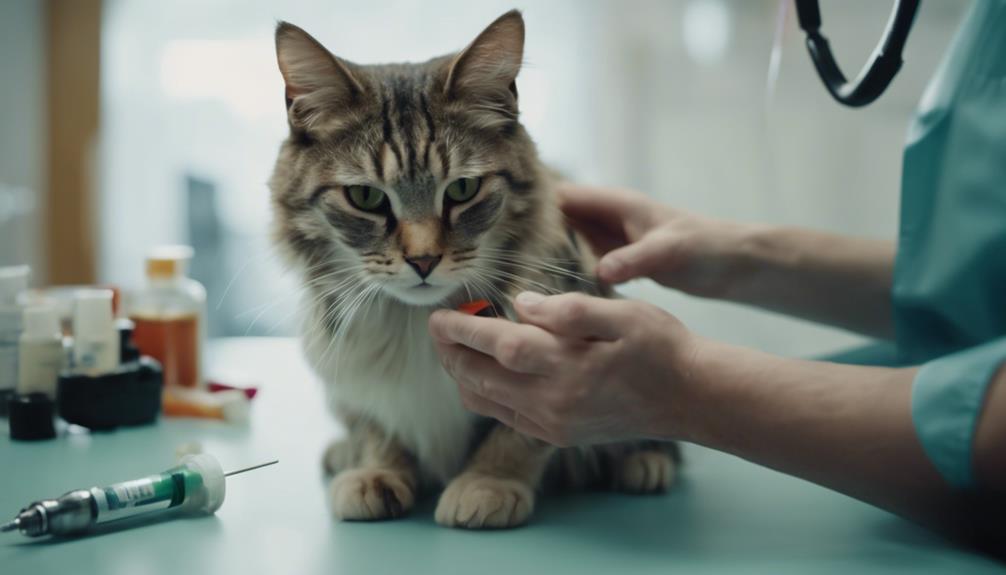
What are the available treatment options for managing rabies in cats once symptoms manifest?
Unfortunately, there is no known treatment for rabies in cats once symptoms appear. Here are some key points to keep in mind:
- Vaccinated cats should be quarantined and monitored if exposed to rabies.
- Unvaccinated cats with rabies are typically euthanized to prevent further spread.
- Rabies in cats progresses rapidly, leading to severe symptoms within days.
- The best protection against rabies in cats is vaccination.
These measures are important in preventing the spread of rabies and protecting both the affected cats and other animals or humans they may come into contact with. Vaccination remains the most effective way to safeguard your feline companions from this deadly disease.
Can a Cat with Pink Eye Transmit Rabies Through a Scratch?
Yes, cats and pink eye can transmit rabies through a scratch. While pink eye itself does not transmit rabies, a scratch from an infected cat can potentially transfer the virus. It’s important to seek medical attention if you or your pet have been scratched by an animal with pink eye.
Prevention of Rabies From Cat Scratches
To minimize the risk of rabies transmission from cat scratches, it is essential to understand the factors influencing the likelihood of infection. While rabies is primarily spread through saliva, aerosolized transmission may occur if scratching is accompanied by hissing and biting. Although rare, contracting rabies from a scratch is possible, especially if the cat exhibits aggressive behavior. Immediate medical attention is vital if there is a potential exposure to rabies.
It is important to note that the primary mode of rabies transmission is through bites. Prevention of rabies from cat scratches involves prompt wound care, seeking medical advice, and ensuring the cat's vaccination status is up to date. By taking these precautions, the risk of rabies transmission from cat scratches can be minimized.