How To Get A Cat Out From Under A Car


To secure a cat out from under a car, start by evaluating the situation for distress or injury. Avoid startling movements with slow, calm actions and a soothing voice. Coax the cat out with food or toys it likes. Contact animal control if needed for expert help. Guarantee safety by wearing protective gear and securing the area. Locate the cat under the car by checking for signs like fur remnants. Approach gently, tapping the car and using protective gloves. Professional help is available if required. A methodical and gentle approach is key to safely handling the situation.
Assessing the Situation

When faced with the task of coaxing a cat out from under a car, the first step is to evaluate the situation carefully to guarantee the safety and well-being of the feline.
Look for signs of distress or injury in the cat and assess its behavior and body language. Consider the environment and any potential escape routes.
Understanding the cat's state of mind is vital for a successful extraction without causing further distress.
Avoiding Startling Movements
When attempting to coax a cat out from under a car, it's important to avoid startling movements that could cause the cat to retreat further.
Cats are sensitive to sudden gestures or loud noises, which may make them more reluctant to come out.
To create a calm and inviting environment, use slow, deliberate movements and a soothing voice to encourage the cat to emerge peacefully.
Slow and Gentle Approach
In employing a soft and deliberate approach, one can effectively coax a cat out from under a car without causing further alarm.
It is essential to speak softly and use slow movements to encourage the cat to move to a safe location.
Avoid sudden gestures or loud noises that could frighten the cat, allowing it time to feel comfortable enough to come out on its own, with non-threatening body language and a soothing tone.
Use Calming Voice
To effectively encourage a cat to come out from under a car, it is important to maintain a soothing and calm demeanor while avoiding sudden movements that could startle the cat further. Using gentle tones and soothing voices can help create a safe environment for the cat. Patience and a non-threatening approach are key in coaxing the cat out from under the car.
| Calm Demeanor | Gentle Tones | Non-Threatening Approach |
|---|---|---|
| Soothing | Soft | Patient |
| Reassuring | Calm | Gentle |
| Relaxing | Comforting | Non-aggressive |
Coaxing With Food or Toys

Using a cat's favorite treats or toys can be effective in coaxing it out from under a car. Entice the cat with its preferred cat food or treats to lure it out.
Toys that mimic prey can also capture its attention and encourage movement. Additionally, scents like catnip, blueberry, or chamomile may attract the cat.
Consider using a laser pointer or interactive toys to engage the cat and guide it out safely.
Contacting Animal Control if Necessary
If faced with challenges in safely retrieving a cat from under a car, seeking assistance from animal control professionals is an essential course of action.
Animal control can provide professional assistance in safely removing the cat, ensuring its well-being. They have the expertise to handle difficult situations, including dealing with stray or feral cats.
Contacting animal control is vital for cases involving injured, aggressive, or hard-to-reach cats, preventing harm and ensuring a safe resolution.
Safety Measures for Cat Removal

When removing a cat from under a car, it is vital to wear protective gloves and guarantee the safety of the surroundings.
Before attempting the removal process, secure the area by turning off the car engine and activating the safety brake.
These safety measures are essential to safeguard both the cat and yourself during the removal procedure.
Protective Gear for Removal
In order to guarantee personal safety and minimize the risk of injury during the process of removing a cat from under a car, it is essential to don appropriate protective gear.
This includes wearing thick gloves to protect against scratches and bites, long sleeves and pants to prevent injuries to arms and legs, protective eyewear for shielding the eyes, a face mask to guard against allergens, and clothing made of durable material to withstand potential clawing.
Secure Area Before Proceeding
Prior to starting the process of cat removal from under a car, it is essential to make sure the surrounding area is secured and free of potential hazards that could endanger the cat. Confirm a pair of thick gloves are worn for protection.
Clear any sharp objects that may harm the cat. Create a calm environment to coax the cat out safely. Knock on the hood gently to signal your presence and encourage the cat to move.
Locating the Cat Under the Car
Begin by examining the surroundings of the vehicle for indications such as fur remnants, paw prints, or audible meows to determine the cat's presence underneath the car.
- Look for fur remnants or paw prints near the wheels.
- Listen for meowing sounds coming from under the car.
- Use a flashlight to scan the wheel wells and other hidden areas for the cat.
Turning Off Vehicle and Approaching Cat
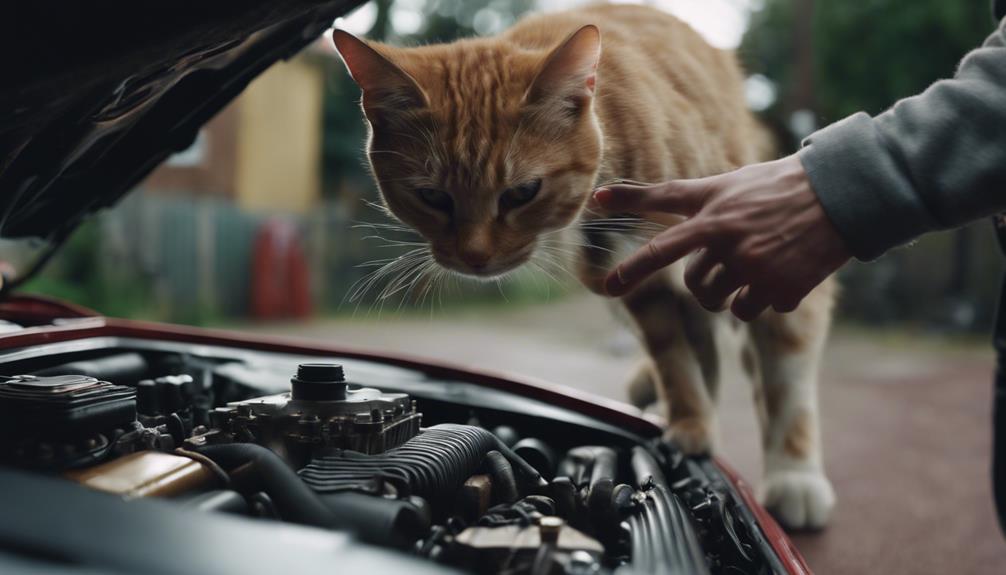
Upon shutting off the vehicle engine, the next step involves approaching the cat calmly and slowly to make sure a safe and successful retrieval from under the car. Make gentle sounds or tap the hood to encourage the cat to move. Remember to wear protective gloves to prevent scratches or bites.
It's important to avoid sudden movements or loud noises that could startle the cat further and cause it to retreat deeper under the car.
Can the Same Techniques be Used to Get a Cat Out of a Tree as from Under a Car?
When it comes to getting a cat out of a tree versus from under a car, different techniques are needed. For the cat in the tree, luring it down with food or using a ladder may work. For the cat under a car, coaxing it out with gentle persuasion is key.
Seeking Professional Assistance if Needed
When faced with difficulty in coaxing the cat out from under the car, it may be wise to seek the expertise of local animal control or a veterinarian for specialized assistance in guaranteeing the safe removal of the feline.
- Professional rescuers have the necessary tools and experience to handle the situation without causing harm to the cat.
- Seeking professional help guarantees the cat's well-being and reduces the risks associated with DIY removal attempts.
- Veterinarians can provide sedation or calming techniques to facilitate the cat's extraction from a challenging location.