How To Groom Long Haired Cats


To groom long-haired cats effectively, use specific brushing techniques and tools. Regular brushing is important, focusing on problem areas like behind the ears. Slicker brushes and combs with long, wide teeth help manage loose hairs and tangles. Essential grooming tools include de-matting tools for smooth fur maintenance. Clean and replace tools regularly for best performance. Proper grooming prevents matting and maintains healthy fur. Bathing with cat-specific shampoo and gentle drying techniques are essential. Trimming with professional scissors prevents mats and tangles. Regular ear care, nail clipping, and dental care ensure overall well-being. Maintaining these practices results in a happy, healthy feline coat.
Brushing Techniques for Long-Haired Cats

Long-haired cats require regular brushing using specific tools and techniques to maintain their coat's health and appearance. Brush close to the cat's body, paying attention to problem areas like behind the ears.
To address knots and matting, use a slicker brush with thin wire teeth for loose hairs and combs with long, wide teeth for tangles. Specialized de-matting tools are gentle solutions for knotty areas, ensuring the cat's skin stays healthy.
Essential Tools for Cat Grooming
When grooming long-haired cats, having the right tools is vital to maintaining their coat's health and appearance.
Slicker brushes with thin wire teeth are excellent for removing loose hairs, while combs with long, wide teeth can help detangle their fur.
Specialized de-matting tools are essential for handling knotty areas gently and effectively.
Required Grooming Tools
To ensure effective grooming and maintenance of a long-haired cat's coat, essential tools are required. These include slicker brushes with thin wire teeth, combs with long, wide teeth, and specialized de-matting tools.
Slicker brushes help remove loose hairs and prevent matting. Combs are crucial for detangling and maintaining a healthy fur coat. Specialized de-matting tools are essential for addressing knotty areas without causing discomfort, ensuring a smooth grooming process.
Grooming Tool Maintenance
Regular maintenance of essential grooming tools for cat care is crucial to guarantee peak hygiene and grooming effectiveness.
- Clean grooming tools regularly to prevent buildup of dirt, hair, and bacteria.
- Replace worn out or damaged tools promptly.
- Store tools in a dry, clean place to avoid contamination.
- Use dematting tools for tough knots and slicker brushes for regular grooming.
- Proper maintenance guarantees longevity and safety for grooming long-haired cats.
Managing Matting in Long Hair
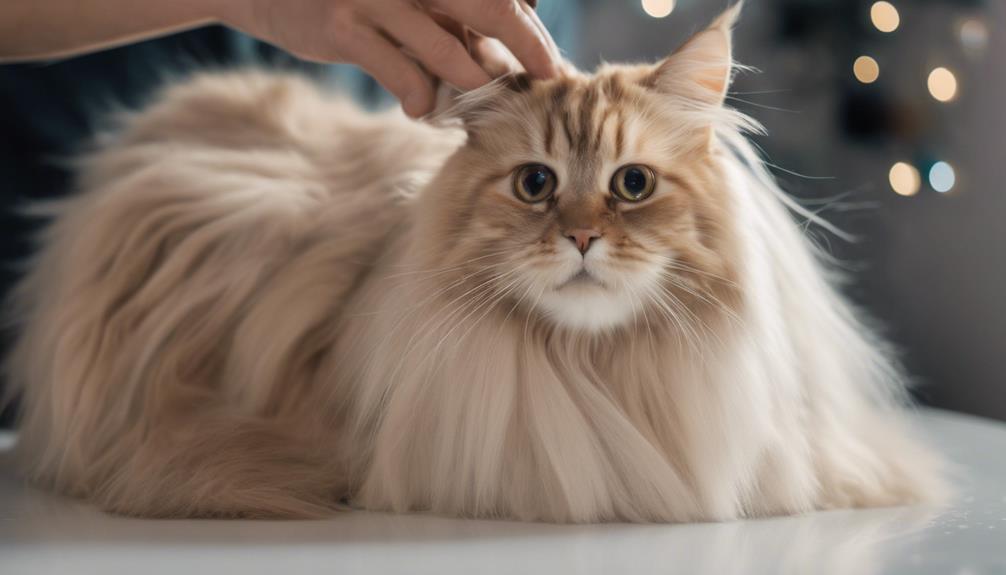
Managing matting in long-haired cats is an important aspect of grooming to guarantee their comfort and well-being.
Regularly groom your long-haired cat's fur to prevent knots of matted hair. Use a brush or comb, specifically designed for long-haired breeds, and a dematting tool if needed.
Tease out minor mats gently to avoid discomfort. Severe matting may require professional assistance like cutting or shaving by a groomer or vet to safeguard the cat's health.
Bathing and Drying Long-Haired Cats
When bathing and drying long-haired cats, it is crucial to use a cat-specific shampoo to maintain their skin health and avoid irritation.
- Use a cat-specific shampoo: Prevent skin irritation.
- Rinse thoroughly: Avoid residue.
- Towel dry gently: Prevent tangles.
- Consider low heat setting on pet dryer: Prevent discomfort.
- Monitor body language: Guarantee cat's comfort.
Trimming and Maintaining Cat's Hair

To properly maintain the grooming of long-haired cats, trimming their hair is crucial to prevent mats and tangles that can lead to skin irritation. Use professional grooming scissors designed for cats to guarantee safe and precise trimming.
Regular trimming can also prevent hairballs and overheating, especially in warmer climates. Exercise caution when trimming sensitive areas like the face, ears, and tail to avoid accidents or injuries.
Ear Care for Long-Haired Felines
Effective ear care is essential for maintaining the health and well-being of long-haired felines.
- Inspect your long-haired cat's ears regularly.
- Clean the outer ear area with vet-approved ear cleaner and cotton balls.
- Look out for signs of infections like unusual smells, discharge, or redness.
- Avoid inserting anything into the ear canal.
- Consult a veterinarian if you notice any concerning changes for proper diagnosis and treatment.
Can Grooming Techniques Help with Regrowing a Long Haired Cat’s Hair?
Proper grooming techniques can aid in how to make cat hair grow. Regular brushing stimulates circulation and spreads natural oils, promoting healthy hair growth. Additionally, a high-quality diet rich in essential nutrients can also contribute to regrowing a long haired cat’s hair.
Nail Clipping and Dental Care

Regular maintenance of your long-haired cat's nails and dental hygiene is essential to ensure their overall health and well-being. For nail clipping, use specialized cat nail clippers every 2-4 weeks to prevent overgrowth and discomfort. Dental care is vital to prevent dental disease; brush your cat's teeth regularly with cat-specific toothpaste and a soft brush. These practices help maintain good oral hygiene and prevent scratching issues.
| Nail Clipping | Dental Care | Specialized Tools |
|---|---|---|
| Prevent overgrowth | Prevent dental disease | Cat nail clippers |
| Trim every 2-4 weeks | Brush teeth regularly | Avoid cutting the quick |
| Avoid discomfort | Maintain oral hygiene | Soft brush |