How To Handle Food Aggression In Cats


To handle food aggression in cats effectively, first, understand it stems from their solitary predatory nature and diet. Signs include guarding food, hissing, or stealing. Identify triggers like weaning age or stress. Manage by checking health, feeding separately, and not reinforcing begging. Establish feeding routines, maintain consistent mealtimes, and separate feeding spaces. Create a calm feeding environment with interactive feeders. Use positive reinforcement like treats for good behavior. Consistently reinforcing positive actions helps. Keep exploring ways to manage food aggression in cats.
Understanding Food Aggression in Cats

Food aggression in cats is a behavioral issue that can commonly arise due to their solitary predatory nature and carnivorous diet. Cats may exhibit behaviors like guarding the food bowl, hissing, growling, or stealing food.
Factors such as premature weaning, stress, and positive reinforcement can trigger food aggression. Managing food aggression involves addressing medical issues, feeding cats separately, and avoiding reinforcing begging behavior.
Identifying Triggers and Behaviors
When observing feline behavior related to mealtime, it is important to pay close attention to the triggers and actions displayed by the cat. Signs of food aggression include guarding the food bowl, hissing, growling, stealing food, and excessive begging for treats.
Understanding these behaviors is vital in addressing cat behavior issues during feeding. By recognizing these triggers, pet owners can take appropriate steps to manage mealtime interactions effectively.
Establishing Feeding Routines
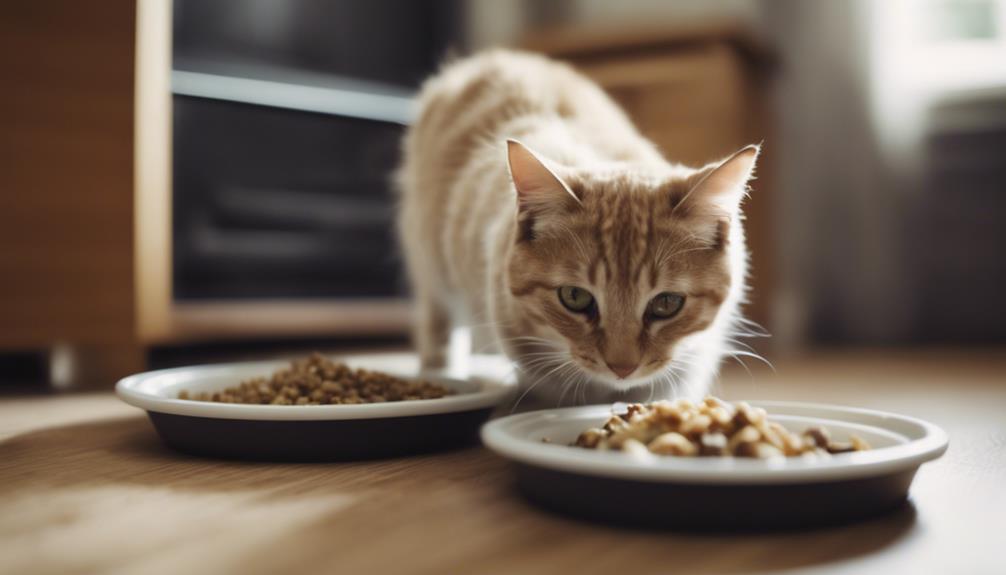
Establishing feeding routines for your cat involves maintaining consistent meal times, providing separate feeding spaces, and closely monitoring your cat's meal behavior.
By following these points, you can help regulate your cat's eating habits, reduce food aggression, and create a stress-free feeding environment.
Implementing these strategies can promote healthy eating behaviors and prevent conflicts during mealtime.
Consistent Meal Times
Implementing a regular feeding schedule is essential for managing food aggression in cats and promoting their overall well-being. Consistent meal times reduce food aggression by providing a predictable feeding schedule, creating a sense of security for cats.
Establishing routine meal times fosters healthier eating habits, prevents overeating, and allows owners to monitor their pet's appetite effectively, promoting a balanced diet and reducing the risk of vomiting.
Separate Feeding Spaces
To promote harmonious feeding environments and prevent food aggression in multi-cat households, it is imperative to designate separate feeding spaces for each feline resident.
- Each cat should have its own designated feeding area with a clean food bowl.
- Establish consistent feeding times to create a calm and predictable environment.
- Encourage individual feeding spaces to promote healthy behavior in maturity and provide environmental enrichment.
Monitor Meal Behavior
To ensure a peaceful mealtime routine for your cats and minimize food aggression, it is crucial to closely observe and manage their feeding behaviors.
Establishing a routine feeding schedule to regulate meal times, using interactive toys for mental stimulation, and separating cats during feeding to create a calm environment are important.
Monitoring meal behavior helps identify signs of food aggression early, allowing prompt intervention to maintain a stress-free feeding atmosphere.
Creating Safe Feeding Environments

How can the feeding environment be optimized to promote safety and reduce food aggression in multi-cat households?
- Provide separate feeding locations for each cat.
- Guarantee a calm and quiet feeding environment.
- Use interactive toys or puzzle feeders during meal times for mental and physical engagement.
Implementing Positive Reinforcement Techniques
Positive reinforcement techniques involve rewarding good behavior in cats, such as calm eating habits, by using treats or praise.
Clicker training can also be a useful tool in reinforcing positive behaviors during feeding time.
These methods aim to create a more positive feeding environment and reduce food-related aggression in cats.
Reward Good Behavior
Implementing positive reinforcement techniques is essential in handling food aggression in cats. By rewarding good behavior, you can shape their actions positively. Here's how:
- Offer treats when your cat waits calmly during mealtimes.
- Give praise or a small reward for not displaying aggression around food.
- Consistently reinforce these behaviors to encourage trust and discourage food aggression.
Use Clicker Training
To address food aggression in cats effectively, incorporating clicker training can greatly aid in modifying their behavior during feeding sessions.
Clicker training, a form of positive reinforcement, involves using a device to mark desired behaviors, rewarding cats with treats or praise. This technique helps cats understand which actions earn rewards, gradually reducing food aggression over time.
Consistent use of clicker training can strengthen the bond between cats and owners.
Providing Nutritious Meal Options

Offering a variety of high-quality commercial cat foods is vital in providing nutritious meal options for your feline companion. Consider incorporating wet food to supply moisture and protein.
Rotate protein sources such as chicken, fish, and beef for dietary variety. Include food supplements like omega-3 fatty acids or probiotics for added health benefits.
Consulting with your vet guarantees a balanced diet tailored to your cat's specific needs.
Utilizing Food Dispensing Toys
Incorporating food dispensing toys into your cat's mealtime routine can provide mental stimulation and encourage natural hunting behaviors, contributing to their overall well-being and health. These toys slow down eating, prevent overeating, and reduce the risk of vomiting. They promote physical activity, prevent obesity, alleviate boredom, anxiety, and stress, and enhance the bond between pet parents and cats through interactive play.
| Benefits | Description |
|---|---|
| Mental Stimulation | Engages cats in interactive play, stimulating their minds and preventing boredom. |
| Natural Hunting Behaviors | Encourages cats to "hunt" for their food, mimicking their instinctual behaviors in the wild. |
| Prevent Obesity | Makes cats work for their food, promoting physical activity and preventing weight issues. |
| Interactive Play | Enhances the bond between pet parents and cats through engaging feeding sessions. |
Reducing Mealtime Stressors

When addressing mealtime stressors in cats, creating a calm and quiet feeding environment is essential to promote a positive feeding experience. To reduce your cat's psychogenic abnormal feeding behavior, consider:
- Feeding cats two
- Typical aggressive
- Feeding your cat
Can Food Aggression in Cats Lead to Biting Behavior in Kittens?
Food aggression in cats can result in aggressive kitten biting behavior. To prevent this, consider implementing kitten biting behavior solutions such as feeding kittens separately and providing interactive toys to redirect their aggression. Consulting with a veterinarian or animal behaviorist can also provide valuable insight into managing this issue.
Seeking Professional Guidance When Needed
In cases where mealtime stressors persist despite efforts to create a calm feeding environment, seeking professional guidance from feline behaviorists or veterinarians can provide vital assistance in addressing food aggression in cats.
Professional help is essential, especially if your pets exhibit sudden changes in behavior or if mealtime aggression persists.
Contact Us for expert advice on developing effective treatment plans, ensuring your cats eat multiple small meals a day for at least five times.