How To Tell If A Cat Has Anxiety


Detecting anxiety in cats involves observing behavioral and physical signs. Behavioral signs include urinating outside the litter box, excessive meowing, aggression, startle reactions, or behavioral changes like overgrooming. Physical indicators may include rapid breathing, frequent nose licking, dilated pupils, or weight changes. Look out for separation anxiety with excessive meowing, litter box problems, or destructive behavior, often triggered by routine changes. Stress behaviors like excessive grooming, hiding, decreased appetite, aggression, or indoor spraying also indicate anxiety. Understanding these signs can help in providing essential support for your feline friend's well-being.
Behavioral Signs of Cat Anxiety

Identifying behavioral signs indicative of anxiety in cats is essential for understanding and addressing their emotional well-being. Signs of anxiety may include:
- Urinating outside the litter box
- Excessive meowing
- Aggressive behavior
- Being easily startled by noises
Cats with anxiety might exhibit changes in behavior such as overgrooming or constant vocalization. Recognizing these behavioral cues is important for providing appropriate care and support for anxious felines.
Physical Indicators of Cat Anxiety
Recognizing physical indicators of cat anxiety is essential for understanding and addressing the emotional well-being of felines. These include:
- Rapid breathing, which may signal stress or fear.
- Frequent nose licking, indicating nervousness.
- Dilated pupils, showing heightened arousal.
- Weight changes, whether gain or loss, as signs of chronic anxiety.
Monitoring these physical signs is vital in identifying cat anxiety.
Recognizing Separation Anxiety in Cats

Recognizing separation anxiety in cats involves observing signs like excessive meowing, litter box issues, and destructive behavior. Common triggers for separation anxiety can include sudden changes in routine or being left alone for extended periods.
Owners can manage this anxiety by providing distractions like toys, gradually increasing time away, and seeking advice from a veterinary behaviorist.
Signs of Separation Anxiety
Signs of separation anxiety in cats can manifest through various behaviors such as:
- Excessive meowing
- Changes in eating habits
- Increased self-grooming
- Inappropriate elimination
- Destructive actions like furniture scratching
Excessive meowing, altered eating patterns, excessive self-grooming, elimination issues, and destructive behavior are all indicators that a cat may be experiencing separation anxiety. Recognizing these signs is essential in addressing and managing the cat's anxiety effectively.
Common Triggers in Cats
When observing cats for signs of separation anxiety, it is important to be attentive to common triggers that may exacerbate their distress. Changes in routine, such as when the owner leaves or returns home, can trigger separation anxiety. Cats may exhibit destructive behaviors like scratching furniture or excessive vocalization.
Environmental changes, new pets, or recent moves can also contribute to separation anxiety, leading to inappropriate elimination outside the litter box.
Coping Strategies for Owners
Owners can effectively manage separation anxiety in cats by implementing various coping strategies that prioritize the well-being and comfort of their feline companions. To prevent separation anxiety, start with shorter absences, offer a perch for viewing, use calming scents, remove departure cues, and provide cuddles upon return.
Seeking veterinary advice early is essential, exploring non-medication options first, consulting with a veterinary behaviorist, and considering medication as a last resort.
Symptoms of Feline Anxiety

Feline anxiety can be identified through a range of observable behaviors and physical cues.
- Excessive grooming
- Behavioral signs like pacing or excessive meowing
- Physical signs such as rapid breathing or dilated pupils
Early intervention is vital for managing anxiety in cats.
Stress Behaviors in Cats
Stress behaviors in cats manifest through a variety of observable signs and symptoms, indicating underlying anxiety that requires attention and proper management.
| Stress Behaviors | Description |
|---|---|
| Excessive Grooming | Overgrooming fur |
| Hiding | Avoiding interaction |
| Decreased Appetite | Eating less food |
| Aggression | Hostile behavior |
| Indoor Spraying | Urinating indoors |
Detecting Anxiety in Cats

Detecting anxiety in cats involves observing behavioral changes such as excessive grooming, hiding, or aggression. Additionally, noting physical symptoms like rapid breathing, dilated pupils, or weight fluctuations can provide valuable insights.
Understanding potential environmental stress triggers, such as changes in the household or routine, is also essential in identifying anxiety in cats.
Behavioral Changes Observed
Behavioral alterations, such as changes in litter box habits and excessive grooming, serve as key indicators of potential anxiety in felines.
- Altered litter habits
- Excessive grooming
- Increased vocalization
- Aggressive behaviors
Physical Symptoms Noticed
Physical manifestations of anxiety in cats can include:
- Rapid breathing
- Dilated pupils
- Frequent nose licking
Weight changes and crouching down are also physical signs of cat anxiety.
Excessive vocalization and aggression, like hissing or growling, may be observed in cats experiencing stress.
Recognizing these physical symptoms can help pet owners identify and address anxiety in their feline companions promptly.
Environmental Stress Triggers
Identifying the environmental stress triggers that contribute to feline anxiety is essential for maintaining the well-being of our cats.
- Changes in resources, like food or water location, can trigger anxiety.
- Recent home moves or renovations can lead to stress.
- Introducing a new pet or a new baby can create anxiety.
- Intrusion by another cat into the territory can cause stress.
Common Signs of Cat Anxiety
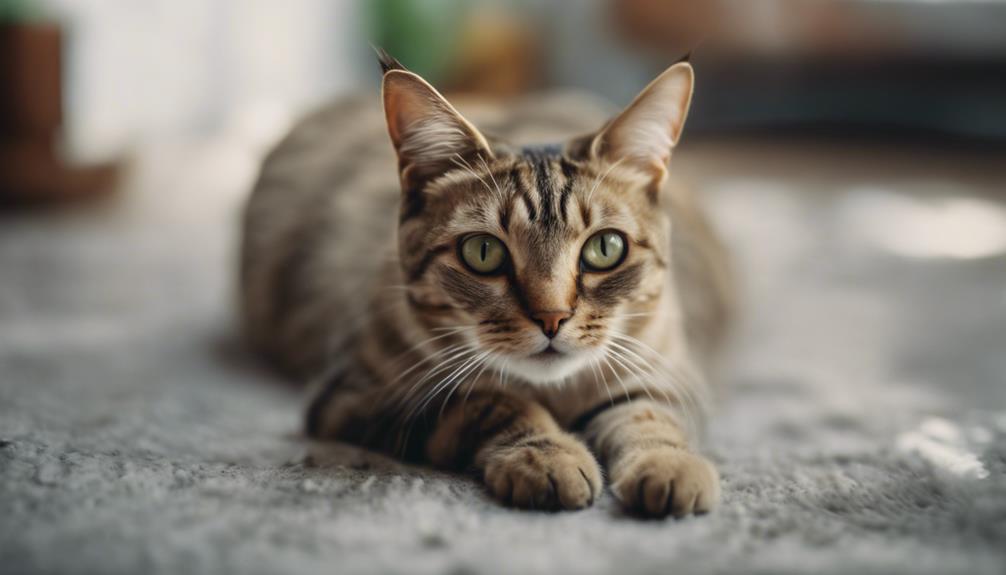
Recognizing signs of anxiety in cats can be essential for their well-being and overall quality of life. Common signs of cat anxiety include physical signs like rapid breathing, nose licking, dilated pupils, and weight changes.
Behavioral signs may manifest as urinating outside the litter box, excessive scratching, aggressive behavior, constant meowing, and being easily spooked by noises. Other signs include pacing, hiding, decreased appetite, vocalization, trembling, salivation, and excessive grooming.
Notable Anxiety Indicators in Cats
One key indicator of anxiety in cats is excessive grooming, which can be a noticeable behavioral sign pointing to underlying stress or unease.
- Loss of appetite
- Increased vocalization
- Trembling or shaking
- Pacing back and forth
Can Cat Allergies Contribute to Cat Anxiety?
Yes, being allergic to cats symptoms can contribute to cat anxiety. Cats are sensitive animals and can pick up on their owner’s stress. If a cat senses their owner is experiencing allergic reactions, it can lead to increased anxiety in the cat.
Identifying Anxiety Symptoms in Cats

Notable indicators of anxiety in cats, such as excessive grooming and loss of appetite, serve as valuable cues to recognize potential stress or unease in feline companions.
Look for signs like pacing, hiding, decreased appetite, vocalization, trembling, salivation, and excessive grooming.
Physical signs like rapid breathing, frequent nose licking, dilated pupils, weight changes, and excessive scratching may also indicate cat anxiety.
Creating a safe environment can help alleviate the causes of anxiety in cats.