Is Chamomile Poisonous To Cats

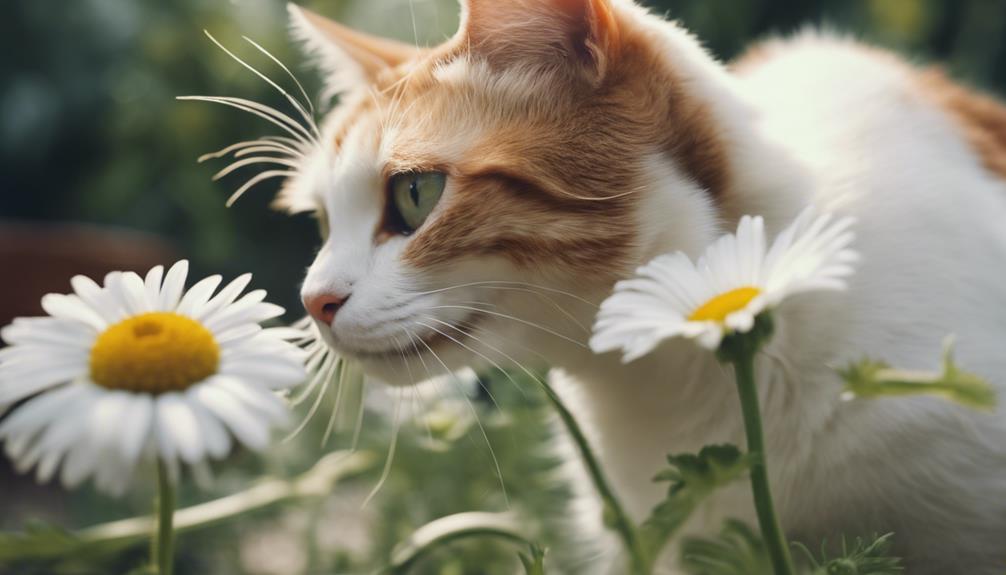
Chamomile can be harmful to cats due to compounds like bisabolol, chamazulene, anthemic acid, and tannic acid. These can cause serious health issues upon ingestion, needing immediate veterinary care. Symptoms may include vomiting, diarrhea, and allergic reactions. Long-term effects such as bleeding tendencies can occur if left untreated. Treatment involves inducing vomiting, activated charcoal, and IV fluids. Contact a vet or Animal Poison Control Center if ingestion is suspected. Prevent exposure to chamomile to safeguard your feline companion's well-being. Understanding the risks associated with chamomile ingestion is essential for cat owners.
Overview of Chamomile Toxicity in Cats
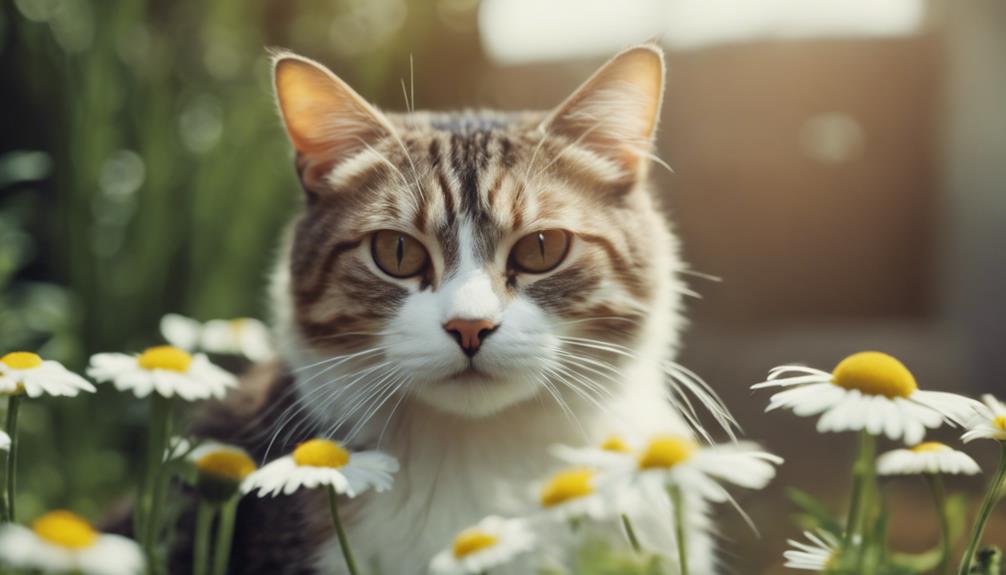
Chamomile toxicity in cats poses a significant risk due to the presence of toxic compounds such as bisabolol, chamazulene, anthemic acid, and tannic acid in the plant. Cats may exhibit signs like contact dermatitis when exposed to chamomile.
The volatile oil, bisabolol, found in chamomile is particularly harmful to felines. Chamomile, scientifically known as Anthemis, can lead to severe health issues if ingested by cats, necessitating prompt veterinary attention.
Toxic Principles in Chamomile
The presence of volatile oil, bisabolol, chamazulene, anthemic acid, and tannic acid in chamomile contributes to its toxicity in cats.
| Toxic Component | Potential Side Effects | Contact |
|---|---|---|
| Anthemic Acid | Vomiting, diarrhea | Contact dermatitis |
| Tannic Acid | Anorexia | |
| Chamazulene | Allergic reactions |
Clinical Signs of Chamomile Ingestion

Clinical signs of chamomile ingestion in cats can manifest as vomiting, diarrhea, and anorexia. Additionally, cats may display symptoms such as contact dermatitis, allergic reactions, and potential long-term issues like bleeding tendencies.
Immediate veterinary attention is vital if a cat exhibits signs of chamomile poisoning to prevent serious complications and guarantee proper treatment.
Chamomile Toxicity Symptoms
Symptoms of chamomile toxicity in cats may manifest as various adverse reactions affecting their skin, gastrointestinal tract, and overall well-being. These may include contact dermatitis, vomiting, diarrhea, and allergic reactions.
Long-term ingestion can lead to anorexia and weight loss. Cats may also experience bleeding tendencies.
Timely veterinary intervention is essential if a cat displays signs of chamomile poisoning to prevent further complications.
Treatment for Ingestion
Administering prompt treatment upon detecting chamomile ingestion in cats is essential to mitigate potential harm and guarantee a swift recovery. Treatment may involve inducing vomiting if caught early, administering activated charcoal to absorb the toxin, providing intravenous fluids, and supportive care for symptoms like vomiting and dehydration.
Monitoring for allergic reactions and adverse effects is vital. Veterinary supervision is key to safeguard the cat's well-being post-ingestion.
Immediate Actions for Suspected Ingestion
If you suspect your cat has ingested chamomile, immediate action is essential. Contact the Animal Poison Control Center or your local veterinarian promptly for guidance.
Do not induce vomiting and closely monitor your cat for symptoms such as vomiting, diarrhea, skin issues, loss of appetite, or allergic reactions.
Vet Consultation Recommended
Seeking prompt veterinary consultation is imperative if there is suspicion that a cat has ingested chamomile. Due to potential poisoning risks, contacting a vet immediately can help determine the necessary steps for your cat's well-being.
Professional guidance is vital in addressing any concerns related to chamomile ingestion in cats, ensuring timely examination and appropriate treatment if needed. Prioritizing your cat's health is essential in such situations.
Monitor for Symptoms
Close observation for symptoms is essential when suspecting chamomile ingestion in cats.
- Watch for vomiting, diarrhea, skin problems, weight loss, or allergic reactions.
- Cats may react differently based on sensitivity levels.
- Immediate action is vital to prevent complications.
- Seek veterinary advice promptly to assess and treat potential toxicity issues.
Do Not Induce Vomiting
When suspecting ingestion of chamomile in cats, it is important to refrain from inducing vomiting as an immediate action. Chamomile is toxic to cats, causing symptoms like vomiting and diarrhea.
Contact veterinary advice or the Animal Poison Control Center at (888) 426-4435. Seeking urgent veterinary evaluation is vital for addressing potential toxicity.
Monitor closely for signs of poisoning and follow necessary treatment under veterinary guidance.
Long-Term Effects of Chamomile on Cats
Long-term exposure to chamomile in cats can result in various detrimental effects on their health, including bleeding tendencies, allergic reactions, gastrointestinal disturbances, and contact dermatitis.
- Bleeding tendencies due to chamomile's toxic principles.
- Allergic reactions with prolonged exposure.
- Gastrointestinal issues like vomiting, diarrhea, and anorexia.
- Potential contact dermatitis from chamomile toxicity.
Importance of Veterinary Assistance

After observing potential signs of chamomile poisoning in cats, seeking veterinary assistance promptly is essential to mitigate the risks associated with this toxic exposure.
Immediate veterinary help is vital to address symptoms like contact dermatitis, gastrointestinal upset, and allergic reactions, which are common in cases of chamomile toxicity in cats.
Timely intervention can help prevent further complications and safeguard the well-being of the affected feline.
ASPCA Animal Poison Control Center Contact
In cases where chamomile ingestion is suspected in cats, contacting the ASPCA Animal Poison Control Center at (888) 426-4435 is essential for timely guidance and assistance.
- When contacting the center, provide information such as the cat's weight, the amount of chamomile ingested, and any symptoms observed.
- Follow any recommendations given by the ASPCA Animal Poison Control Center promptly.
- Be prepared for a consultation fee when seeking advice.
- Immediate contact with a local veterinarian is also recommended for assistance.
Are There Other Common Plants That Are Toxic to Cats Besides Chamomile?
Yes, there are other common plants that are toxic to cats besides chamomile. One of the most common dangerous plants for cats is caladium. Caladium toxicity in cats can cause symptoms such as drooling, difficulty swallowing, and vomiting. It’s important to keep your cats away from these toxic plants to ensure their safety. Another common plant that can be toxic to cats is hibiscus. While hibiscus can be a beautiful and colorful addition to your garden, it is important to keep it out of reach of your feline friends. If ingested, hibiscus can cause symptoms such as diarrhea and vomiting in cats. So, to answer the question “is hibiscus toxic for cats,” the answer is yes. It’s best to be cautious and research the potential toxicity of any plant before bringing it into your home.
Preventing Chamomile Exposure to Cats

To safeguard cats from potential harm, it is essential to take proactive measures in preventing their exposure to chamomile.
Keep toxic plants out of reach, securely store chamomile products, and educate household members on the risks.
Be cautious when using chamomile topically near cats and monitor them regularly for signs of poisoning.
These steps are vital in ensuring the well-being of our feline companions.