Is It True That All Cats Kill Mice


Cats have a natural hunting instinct, but not all cats are effective mouse hunters. Some cats excel at catching mice due to their strong hunting instinct, while others may not actively hunt. Cat personalities heavily influence hunting behavior, with territorial or independent cats more likely to engage in hunting. To manage pest populations, evaluate your cat's hunting behavior or consider alternative methods. Professional mouse control methods offer a range of strategies for long-term solutions. Understanding a cat's varied hunting abilities is essential for success in mouse control and ensuring effectiveness in managing pest populations. More insights await on cats' behavior towards live prey and individual hunting skills.
Cat Hunting Instincts
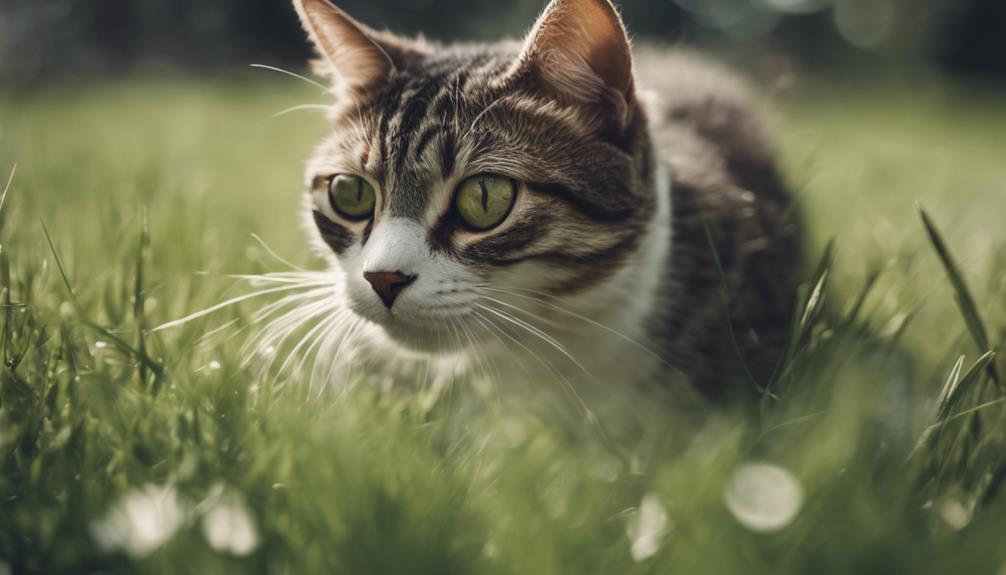
The innate predatory nature of felines is a fundamental aspect of their behavior known as cat hunting instincts. Cats have natural hunting instincts developed over thousands of years, making them proficient hunters.
They love hunting not only for survival but also for fun, exercise, and mental stimulation. Hunting is deeply ingrained in their behavior, providing enjoyment and keeping them alert and active.
Cats' hunting instincts drive their natural inclination to chase prey.
Cat Personality and Hunting
Exploring the interplay between cat personalities and hunting reveals the diverse approaches felines take towards engaging with their predatory instincts.
Cat personality greatly influences their interest and effectiveness in hunting mice. Some cats actively seek out mice due to a strong hunting instinct, while others may show little inclination.
Cats with territorial or independent natures are more likely to hunt, each with their own hunting skills and techniques.
Effectiveness of Cat Hunters

Cat hunters vary greatly in their effectiveness in controlling mouse populations due to their individual hunting instincts and skills.
Not all cats are born with the same abilities for pest control. While some felines excel at catching mice, others may not show interest or may not be as skilled.
It's important to evaluate a cat's hunting behavior before relying on them for mouse control to guarantee effectiveness in managing pest populations.
Adopting Cats for Mouse Control
Adopting cats for mouse control can be a practical solution for managing pest populations, although their effectiveness as hunters varies among individuals. While some cats excel at hunting mice, others may show no interest in it.
Individual cat personalities heavily influence their hunting behavior. It's essential to remember that not all cats will actively hunt mice, so considering alternative methods for mouse control is advisable to address pest issues effectively.
Professional Mouse Control Methods

Professional mouse control methods encompass a range of strategies, including traps, baits, and exclusion techniques, to effectively manage rodent infestations.
Pest control professionals, trained in evaluating and implementing such measures, guarantee the proper handling of mouse infestations to prevent health risks.
These services offer long-term solutions for rodent problems, mitigating property damage and contamination risks associated with unchecked rodent populations.
Cat's Inclination Towards Hunting
Cats' natural inclination towards hunting is deeply rooted in their biology, stemming from thousands of years of evolution. These feline predators exhibit varied hunting behaviors that range from stalking and pouncing to engaging in playful chasing games.
Whether it's for exercise, mental stimulation, or simply for the thrill of the hunt, cats' hunting instincts play a significant role in keeping them alert and active.
Natural Hunting Instincts
With their natural hunting instincts finely tuned through evolutionary processes, domestic cats display a keen inclination towards hunting as a form of entertainment, exercise, and mental stimulation.
Cats have an innate drive to hunt for prey.
Hunting provides cats with physical and mental stimulation.
Domestic cats enjoy the thrill of the chase and the satisfaction of catching prey.
Varied Hunting Behaviors
Hunting behaviors among domestic cats exhibit a spectrum of variability, with certain feline individuals demonstrating a particular inclination towards pursuing mice as prey. Breeds like Maine Coons are known for being good hunters, which can be beneficial in addressing pest problems.
While not all cats possess the same hunting instincts, encouraging this behavior through toys and positive reinforcement can help manage pest issues effectively.
Cat's Varied Hunting Abilities

Varied among feline companions are their hunting capabilities, showcasing a spectrum from highly skilled predators to those displaying little inclination towards capturing mice.
- Some cats love chasing mice but lack the instinct to kill.
- Certain breeds, like Siamese and Maine Coons, excel in hunting.
- Individual personalities greatly influence a cat's motivation to hunt.
Ensuring Success in Mouse Control
Considering the varied hunting behaviors exhibited by cats, ensuring effective mouse control requires a well-rounded approach that goes beyond solely relying on feline companions.
Studies have shown that a cat might not be the most reliable method for rodent control. Depending solely on cats for pest management may not address the root cause of infestations.
As a result, other strategies, such as sealing entry points and using traps, should be considered for a thorough mouse control plan.
Cat's Behavior Towards Live Prey

When observing cats' behavior towards live prey, it becomes evident that their hunting instincts play a significant role. Some cats may engage in playing with prey rather than swiftly killing them, showcasing their natural predatory behavior.
Additionally, cats may exhibit efficient hunting techniques, varying in their approach based on individual instincts and experiences.
Cat Hunting Instincts
Cats' innate hunting instincts, honed through centuries of evolution, drive them to pursue small prey such as mice with remarkable precision and skill.
- Cats rely on their keen senses of sight, hearing, and smell to detect prey.
- They use stealth and patience to stalk their targets.
- Cats pounce on prey using quick reflexes and sharp claws to secure a successful catch.
Play With Prey
Engaging in playful interactions with live prey is an instinctual behavior commonly observed in cats, serving as a means for honing their hunting skills and satisfying their natural instincts. Cats often stalk, pounce, and bat their prey around, mimicking real hunting scenarios.
This playful behavior allows them to practice chasing, capturing, and handling prey, contributing to their development of efficient hunting skills and mental stimulation.
Efficient Hunting Techniques
Observing the behavior of domestic cats towards live prey reveals a fascinating display of efficient hunting techniques honed through instinctual behaviors and predatory instincts.
- Cats use a combination of stalking, pouncing, and biting to catch live prey like mice.
- They often play with their prey to hone their hunting skills and enjoy the thrill of the chase.
- Cats may immobilize mice by biting their necks or playing with them before delivering a final blow.
Do All Cats Have the Instinct to Chirp, Similar to Their Instinct to Hunt Mice?
Yes, all cats chirp behavior is a natural instinct, similar to their instinct to hunt mice. Chirping is a way for cats to communicate with their prey and other felines. It is commonly seen when cats are observing birds or insects, showing their innate hunting instincts at work.
Individual Cat Hunting Skills

Various factors contribute to the individual hunting skills exhibited by cats, including their instincts, experience, and motivation. Some cats excel in hunting mice with precision, while others may lack interest.
Elements like breed, age, and environment can impact a cat's proficiency in catching prey. Training and nurturing a cat's hunting behavior can enhance their skills.
Observing a cat's hunting abilities during play can offer insights into their hunting capabilities.