Types Of Wild Cats In Nebraska


Wild cats in Nebraska include the bobcat, cougar, Canadian lynx, ocelot, and jaguarundi. The bobcat, with its distinctive bobbed tail, roams hunting ranges up to 30 square miles. Cougars, silent apex predators, feed on deer and rodents. Canadian lynxes, resembling large house cats, prey on deer and squirrels in cold habitats. Ocelots, graceful night stalkers, depend on forested areas for hunting. Jaguarundis, daytime wanderers, are agile climbers and swimmers. Nebraska's landscapes host these wild cats with unique traits.
Bobcat: The Elusive Spotted Predator

With its distinctive spotted fur and elusive nature, the bobcat stands out as a skilled predator in the wilds of Nebraska. Sporting facial ruffs, ear tufts, and a bobbed tail, bobcats cover hunting ranges of up to 30 square miles.
Despite facing threats from coyotes, cougars, and humans, these adaptable felines communicate through various vocalizations for mating and territorial purposes. Their ambush hunting style targets prey like cottontail rabbits.
Cougar: The Silent Mountain Lion
Cougars, also known as mountain lions, are apex predators with a wide range of habitats, from mountains to forests. Their diet consists mainly of deer, but they also consume rodents and insects.
Conservation efforts are essential to protect these majestic creatures and maintain the balance in the ecosystem.
Cougar's Habitat and Diet
Preferring mountainous and rural areas, the cougar, also known as the silent mountain lion, establishes its habitat in Nebraska. These nocturnal hunters primarily feed on deer, rodents, and insects.
As the largest wild cats in North America, cougars exhibit adaptability and can be found across North America and Asia. Their ability to thrive in various environments showcases their remarkable survival skills and hunting prowess.
Cougar's Behavior Patterns
Establishing their dominance through stealth and adaptability, cougars in Nebraska exhibit intricate behavior patterns that reveal their prowess as the silent mountain lions of the wild.
As the largest wild cats in the region, these nocturnal predators hunt primarily deer, rodents, and insects.
Cougars, also known as mountain lions, are widely distributed across North America and Asia, showcasing their adaptability and formidable hunting habits in various environments.
Conservation Efforts for Cougars
Conservation initiatives aimed at protecting the habitats of the silent mountain lion, also known as the cougar, in Nebraska are essential for ensuring the long-term survival and genetic diversity of this apex predator.
- Protecting habitats from human encroachment
- Maintaining ecosystem balance by controlling prey populations
- Monitoring cougar populations for genetic diversity
- Implementing education programs for coexisting with cougars
Canadian Lynx: The Cold-Weather Hunter
Known for its tufts on ears and black-tipped tail, the Canadian Lynx is a cold-weather hunter that thrives in snowy environments. Weighing about 18-25 lbs, it preys on deer, mice, livestock, and squirrels. With a range across Canadian provinces and northern US regions, this lynx species has stable populations and a conservation status of least concern. It resembles a large house cat, perfectly adapted to its habitat.
| Physical Features | Hunting Behavior | Habitat |
|---|---|---|
| Tufts on ears | Hunts deer | Snowy environments |
| Black-tipped tail | Hunts mice, livestock, squirrels | Canadian provinces, northern US regions |
Ocelot: The Graceful Night Stalker

Ocelots, with their stunning spotted coats, employ stealthy hunting techniques to capture small prey like turtles and anteaters. These graceful night stalkers thrive in Nebraska's forested habitats, utilizing their nocturnal nature to blend seamlessly into the darkness.
Understanding the ocelot's hunting techniques and habitat range sheds light on its vital role in maintaining the ecosystem's delicate balance.
Ocelot's Hunting Techniques
With its reputation as the graceful night stalker, the ocelot demonstrates unparalleled hunting techniques under the cover of darkness.
- Stealth: Ocelots rely on stealth to stalk prey silently.
- Agility: They exhibit remarkable agility, allowing swift movements during hunts.
- Retractable Claws: Sharp retractable claws aid in capturing and holding onto prey.
- Night Vision: Excellent night vision assists ocelots in locating and ambushing their targets effectively.
Ocelot's Habitat Range
Amidst the dense forests, brushlands, and swampy areas of Nebraska, the ocelot establishes its habitat range as evidence of its adaptability and resilience.
These elusive cats prefer areas with abundant cover to hunt small prey like rodents, birds, and reptiles.
However, sparse populations in Nebraska are threatened by habitat loss and human disturbance.
Conservation efforts are essential to safeguard ocelot habitats and guarantee their survival in the region.
Jaguarundi: The Daytime Wanderer
During daylight hours, the jaguarundi roams the landscapes of Nebraska, showcasing its agile hunting abilities and adaptation skills.
- Small Wild Cats: Jaguarundis weigh 10 to 20 pounds.
- Diurnal Hunters: Active during the day, they primarily feed on small mammals, birds, reptiles, and insects.
- Climbers and Swimmers: Excellent at traversing various terrains.
- Conservation Status: Least concern due to stable populations in Central and South America.
Are the Types of Wild Cats in Nebraska Similar to Those in Montana?
Yes, the types of wild cats in Nebraska are similar to those in Montana. Both states are home to mountain lions, bobcats, and lynxes. These wild cats have adapted to the landscape and climate of their respective regions, making them a common sight for wildlife enthusiasts.
Mountain Lion: The Nebraska Predator
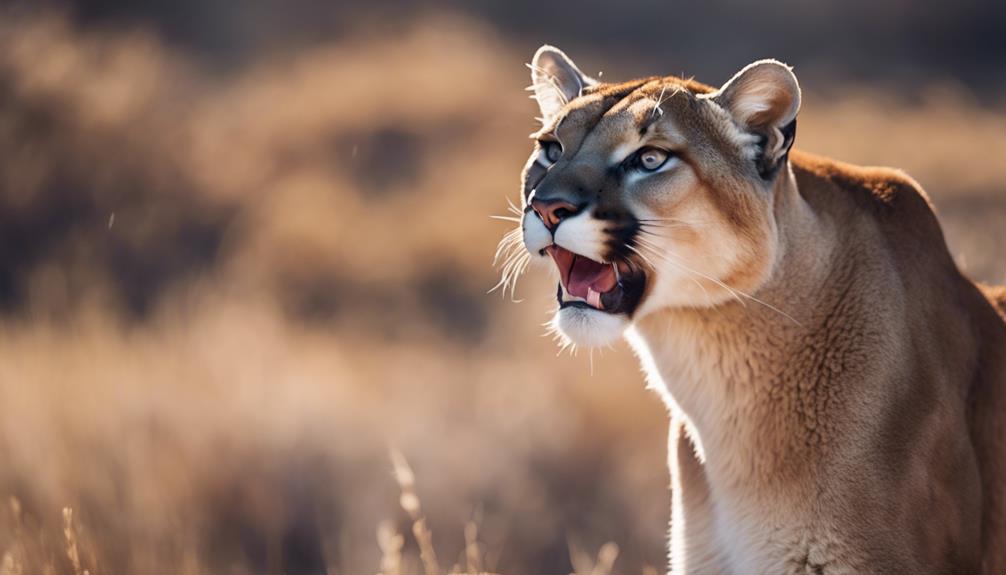
The Nebraska landscape harbors a formidable presence known as the Mountain Lion, a majestic predator silently commanding the ecosystem. As the largest wild cat in North America, mountain lions are nocturnal and solitary, primarily hunting deer and rodents.
Their elusive nature makes them a rare sight in Nebraska's rural areas. Conservation efforts are crucial to maintain the balance of the ecosystem and protect these magnificent predators for future generations.