Why Do Cats Bury Their Poop


Cats bury their poop instinctively to protect themselves from predators and claim territory, following their wild heritage. In multi-cat households, conflicts or litter box preferences may affect this behavior. Burying waste helps cats promote non-threatening communication and avoid territorial disputes. Health issues like urinary tract infections or pain may impact a cat's burying habits. Proper litter box maintenance and health assessments are essential. Understanding your cat's habits and territory can encourage appropriate litter box use. Positioning litter boxes properly and ensuring cleanliness are key. Their poop-burying behavior is an intricate communication method elucidating their instinctual behavior and social interactions.
Reasons for Cats' Poop-Burying Behavior
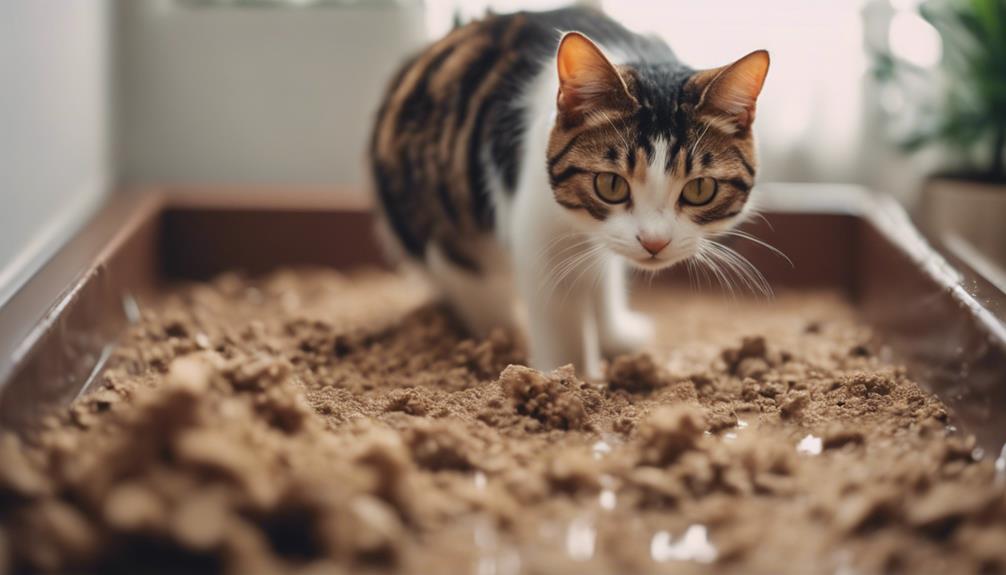
Why do cats exhibit the behavior of burying their poop?
Cats bury their poop as a natural instinct to protect themselves from predators and avoid territorial conflicts.
This behavior stems from their wild ancestry, where unburied poop could act as a scent marker to claim territory.
In multi-cat households, conflicts or litter box preferences may deter burying.
Providing multiple litter boxes and ensuring cleanliness can encourage this behavior.
Potential Issues With Cat's Poop Burying
What factors may lead to cats deviating from their instinctual behavior of burying their poop?
Cats experiencing health issues like urinary tract infections or pain, behavioral changes, arthritis, or aging-related conditions may struggle with poop burying habits. These challenges could indicate underlying medical problems.
If a cat stops burying poop, veterinary consultation is important to address potential health issues promptly. Proper litter box maintenance and health assessment are essential in encouraging cats to bury their poop.
Encouraging Proper Litter Box Use

Positioning litter boxes in quiet, low-traffic areas can help encourage cats to use them properly. Regular scooping and weekly cleaning maintain a hygienic environment.
Experiment with different litter types to discover your cat's preferences gradually. Providing a larger litter box can promote burying behavior.
Understanding your cat's habits and territory can aid in encouraging appropriate litter box use. Creating a comfortable environment is essential for promoting good litter box habits.
Understanding Cat's Communication Through Poop Burying
Understanding a cat's communication through the act of burying their poop sheds light on their instinctual behavior and social interactions with other felines.
Cats bury their waste to communicate non-threatening behavior, avoid territorial disputes, and protect themselves.
Burying poop in litter boxes or outdoor areas serves as a way for cats to signal their presence without posing a threat, utilizing scent markers called pheromones for communication.
Is Cleaning Themselves Often Related to Cats Burying Their Poop?
Cats burying their poop is an instinctual behavior, stemming from their wild ancestors who did so to avoid predators. This behavior is not directly related to their grooming habits. Cats groom themselves for reasons for cat grooming habits that include cleaning their fur, removing irritants, and marking their territory with scent.
Ensuring Cat's Health and Happiness

Prioritizing a cat's well-being involves maintaining their health and happiness through attentive care and a conducive environment. Regularly monitoring domestic cats for health issues like urinary tract infections is essential. Immediate attention to behavioral changes related to litter box usage can prevent discomfort. Veterinary check-ups and consulting a behavior specialist help guarantee a cat's happiness. Providing a clean and comfortable environment promotes proper litter box habits and overall well-being.
| Aspect | Importance | Action Required |
|---|---|---|
| Health Monitoring | Essential | Regular Check-ups |
| Behavioral Observation | Critical | Immediate Attention |
| Environmental Factors | Crucial | Clean & Comfortable |