
Bringing Home a New Cat: A Gentle First 72-Hour Plan
A step-by-step first three days plan for helping a new cat decompress, eat, explore, and trust the household.
Tag
Articles and resources connected to adoption.
Adoption is less a moment than a sequence, and the first fortnight sets the tone. What new owners often read as rejection is usually a cat doing exactly what a cat does in an unfamiliar space: hiding, watching, eating overnight, and emerging when the house finally goes quiet. Hiding does not need to be fixed, it needs a base room with everything within a few steps — food, water, a litter tray, a bed and somewhere to hide inside.
International Cat Care's advice on helping a new cat settle is built on giving the cat control and letting it expand its territory at its own pace, rather than on a fixed timetable. A room-by-room widening over several days usually works better than opening the whole house on day one, and calm, predictable handling in the first week pays off for months.
Book the first veterinary visit early. International Cat Care's position is that every cat should have at least one annual check, and a cat from a shelter frequently arrives with an unknown vaccination and parasite history — a baseline exam removes most of the guesswork. To plan the first week, start with hiding after adoption, then the first 72 hours, and line up the first appointment with vet care basics.
Sources: International Cat Care — Helping your new cat or kitten settle in, International Cat Care — Taking your cat to the vet.
A step-by-step first three days plan for helping a new cat decompress, eat, explore, and trust the household.
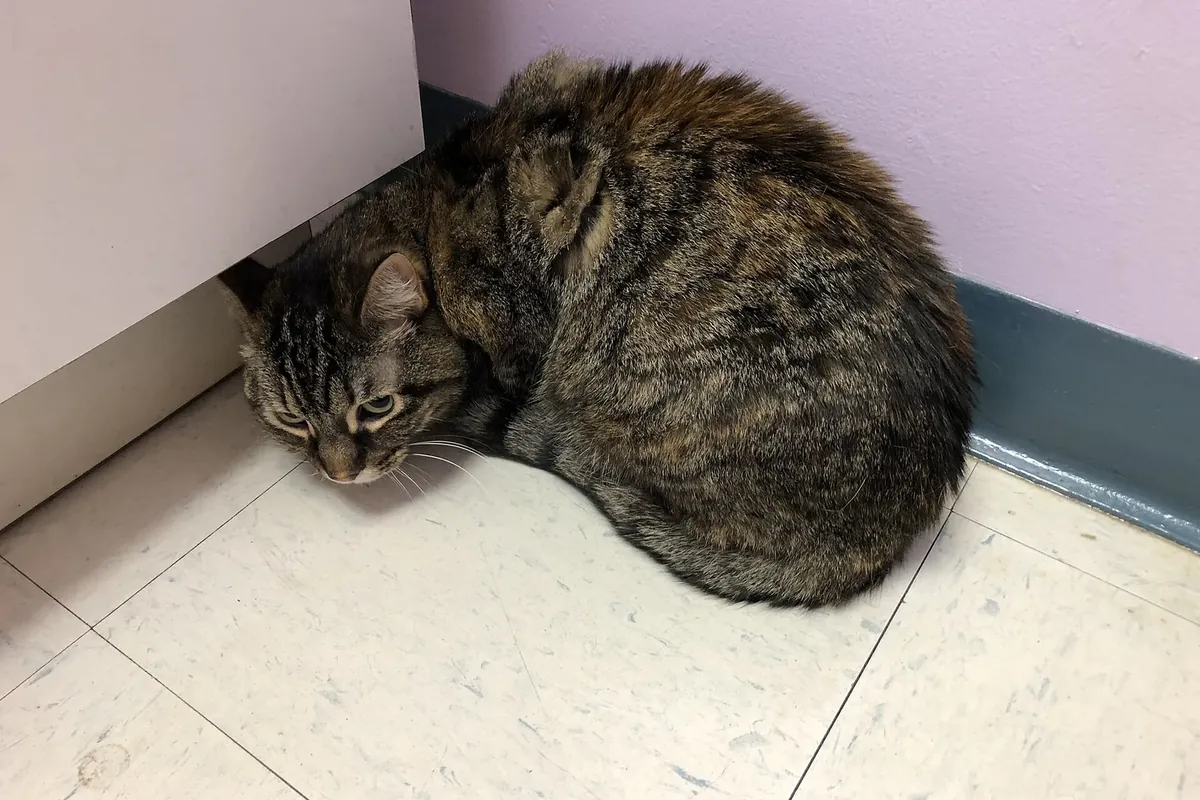
A gentle plan for shy cats using safe rooms, predictable visits, low-pressure play, scent, and patience.

Understand normal adoption hiding, create safer hiding options, track food and litter, and know when hiding needs help.