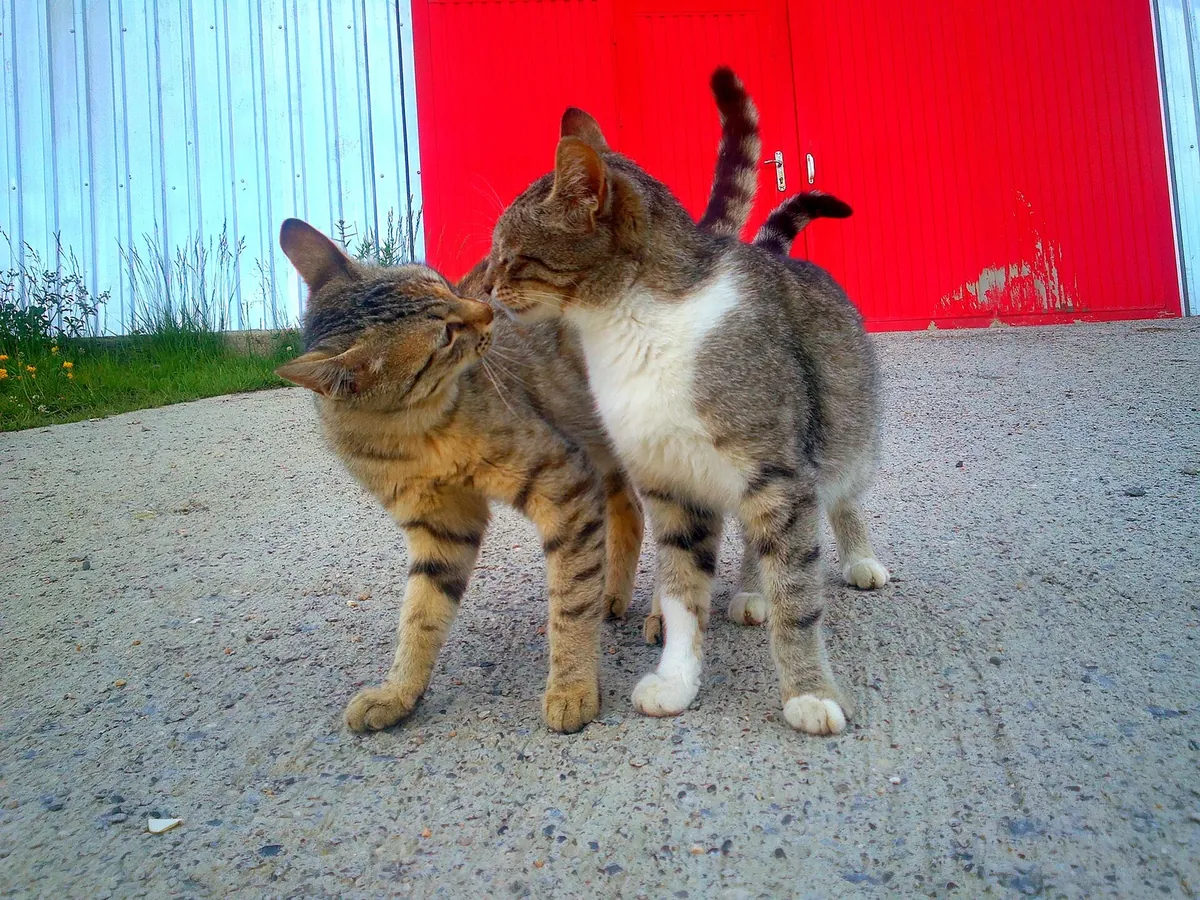
How to Introduce Two Cats Slowly and Kindly
A slow cat introduction plan using separation, scent, feeding distance, visual access, and supervised meetings.
Tag
Articles and resources connected to multi cat.
Living with two or more cats is a resource question before it is a personality question. International Cat Care's rule for a multi-cat home is one of everything per cat plus at least one extra — food stations, water, litter trays, scratching posts, beds and resting spots — and the extras need to be in different places, because resources lined up together can be blocked by a single cat without anyone noticing.
Litter is where this shows up first: trays placed in a row behave like one tray in a household where someone is guarding or lurking. Ohio State's indoor-cat checklist keeps the same shape for scratching, resting areas and perches, and adds a useful detail for play — cats have different prey preferences, so some want to stalk and pounce while others ambush or chase, and matching play to the cat that is actually in front of you prevents a lot of tension.
Start with introducing two cats, then multi-cat feeding and the multi-cat living category.
Feeding is the other half of the same idea. Shared bowls create a queue, and the cat at the back of the queue eats faster, eats less or stops eating — none of which is obvious from a casual look at two cats who seem to get along. Separate stations in separate rooms, with a measured portion each, are how you keep track of who is actually eating what.
Sources: International Cat Care — Choosing a litter tray for your cat, Ohio State Indoor Pet Initiative — Basic Indoor Cat Needs.
A slow cat introduction plan using separation, scent, feeding distance, visual access, and supervised meetings.
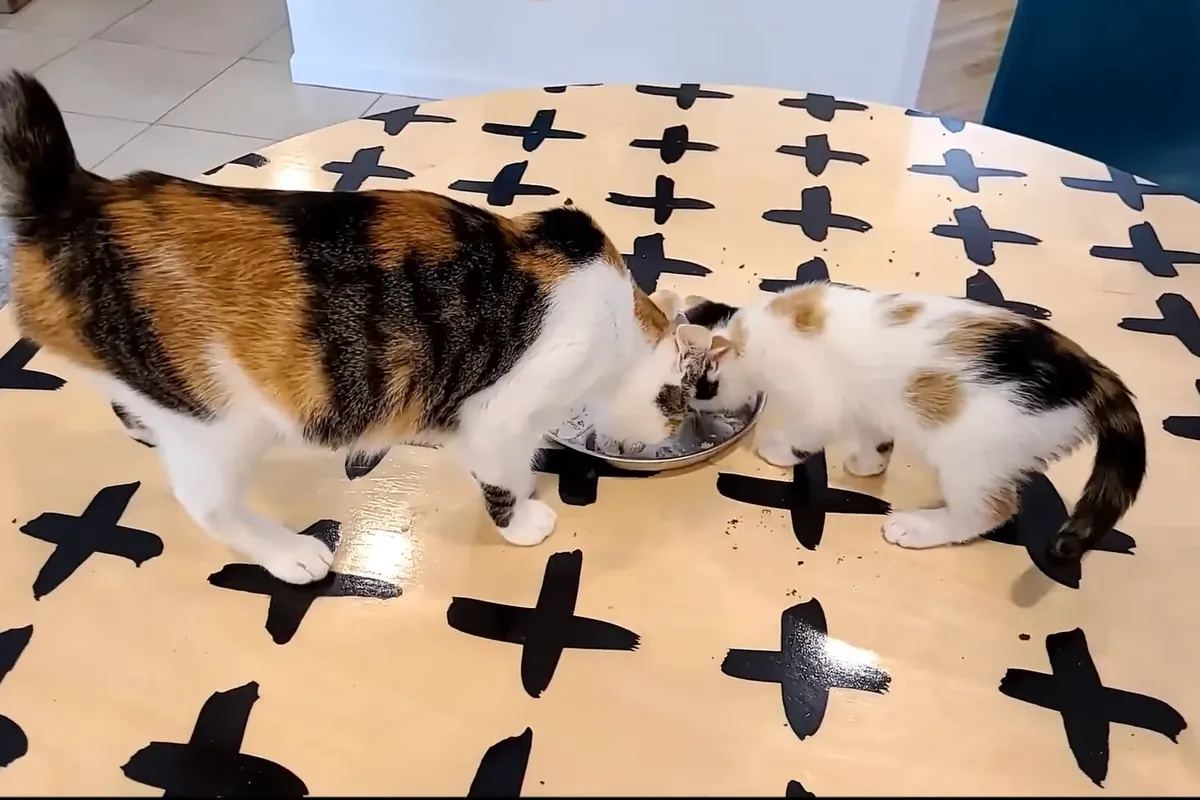
Plan calmer multi-cat meals with separated stations, measured portions, observation, and individual needs.